Akua Printmaking
These ground-breaking inks are made from the highest quality, lightfast pigments, and are complemented by seven modifiers, giving artists the utmost flexibility to experiment with the inks’ viscosity and transparency
Innovation Born from Necessity
The Akua Story
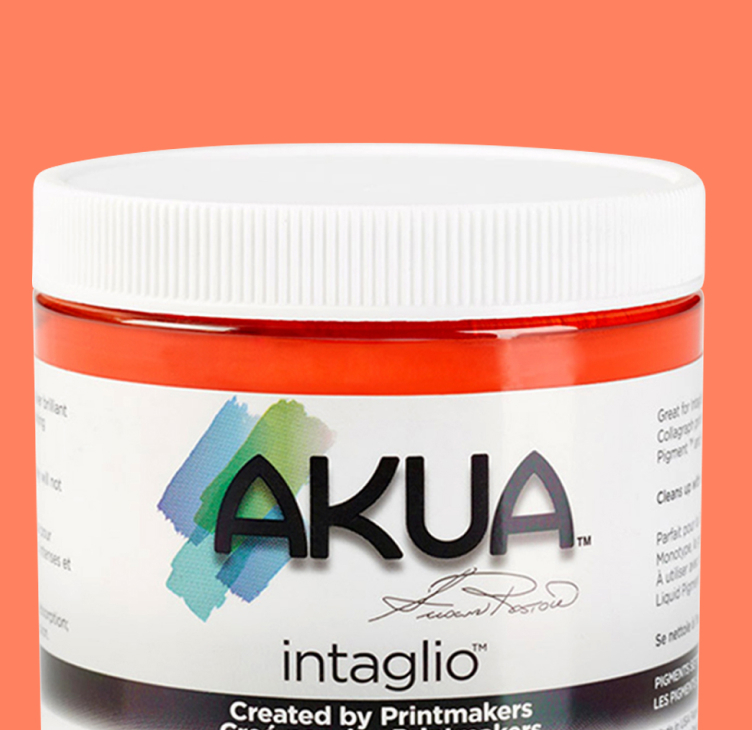
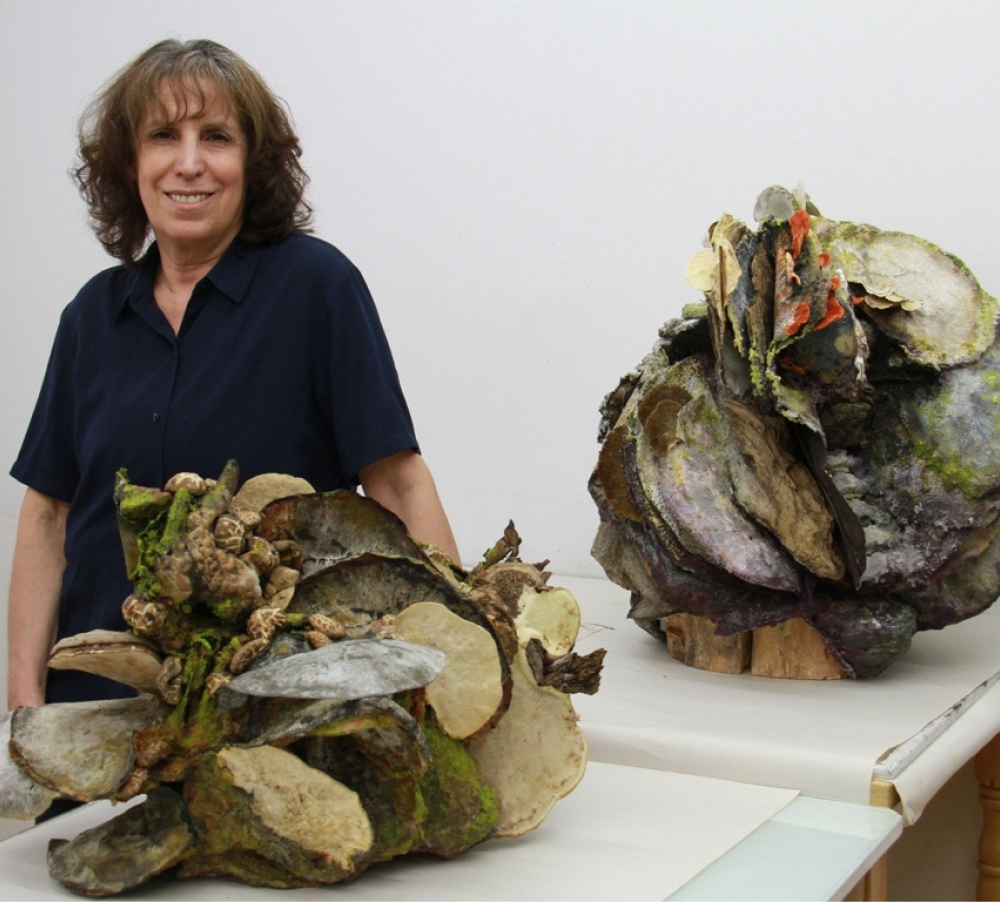
Akua Inks are professional-quality inks created by two printmakers, Susan Rostow and William Jung. Rostow & Jung were motivated to create safe, fume-free inks when they decided to bring a baby into their marriage and their New York City live-in studio.
Through Susan’s leadership and artistic expertise, Akua Intaglio and Akua Liquid Pigment were born—ground-breaking lines that offer an exceptionally long open time and effortless water cleanup. Today, Susan remains a celebrated educator and award-winning artist whose work is held in prestigious collections like the Library of Congress. Her commitment to health and high-performance results continues to define Akua, providing the artist community with the freedom to create without compromise.
Akua FAQs
Formulated to dry through absorption, not evaporation, Akua Inks remove any time constraints from the creative process since the inks will only dry once printed into the fibers of the paper. Akua Inks also eliminate the need to handle toxic solvents, as they clean up easily with soap and water. These ground-breaking inks are made from the highest quality, lightfast pigments, and are complemented by seven modifiers, giving artists the utmost flexibility to experiment with the inks’ viscosity and transparency.
What is the difference between water-based and water-soluble ink?
Are Akua Inks water-based or water-soluble?
My ink arrived separated/has separated over time. Is it a bad batch?
No. Akua Intaglio's unique formulation includes natural ingredients and the highest quality pigments. This combination can lead to some separation after manufacture/between uses (especially with whites or metallics), but will not compromise the superior performance on the plate or when printing.
What are the advantages of Akua Inks?
Akua Inks are high-quality, pigmented inks. They offer the artist the opportunity to work in a safer, fume-free studio without sacrificing the quality of their methods and materials. Akua Inks clean up quickly and easily with soap and water, not hazardous solvents. The ink never hardens or skins, meaning you don’t waste ink and no longer have to use hazardous anti-skin sprays. Akua Inks will not dry on a non-absorbent surface, meaning you never have to clean your palette or worry about damaging tools or plates with dried ink. The fact that Akua Ink doesn’t dry on the slab eliminates the need to clean up right away.
What are the differences between the working qualities and appearance of prints made with Akua Intaglio and oil-based ink?
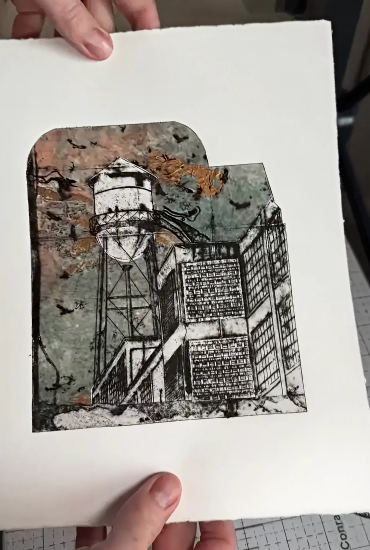
Working with Akua Intaglio Ink is very similar to working with oil-based ink. While the tack and viscosity might initially feel different, the only real change that needs to be made in the studio is the replacement of the solvent can with a bottle of diluted dish soap for cleanup. All other methods and materials remain the same. Additionally, Akua Intaglio Inks make the entire process of wiping the intaglio plate much more efficient and require much less effort and time than oil-based ink. In most situations, prints made with Akua Intaglio Ink look identical to prints made with oil-based ink.
My prints are not drying or drying slowly. What can I do to help this?
Similar to traditional oil-based inks, Akua Intaglio Inks are slow-drying, as they are a soy- (oil-) based ink. Unlike traditional oil based inks, Akua Inks dry by absorption, not evaporation, because they do not contain any toxic cobalt dryers. How long the inks will take to dry will depend both on the type of paper that was used for printing (glossy or coated papers are NOT recommended for use with Akua Inks) and how heavily the ink is applied. As a result, if there are any layers of ink that have not been pressed into the fibers of the paper, they will not dry. The following adjustments can be made to facilitate the inks’ drying time:
• Before Printing: Add Magnesium Carbonate (for Akua Intaglio Ink)- Mix 10% of Magnesium Carbonate into Akua Intaglio Ink. Note: Magnesium Carbonate will cause Akua Intaglio to stiffen when left out overnight.
• After Printing: Dry prints between blotters (for Akua Intaglio or Akua Liquid Pigment Inks)--Blotters are highly-absorbent papers. When storing, be sure to face the print up on a blotter paper. If needed, add another blotter paper on top and change the blotter as needed. Newsprint paper can be used as an inexpensive alternative and works well for blotting and storing prints while drying. If ink offsets onto the Newsprint paper, sprinkle a small amount of baby powder onto the Newsprint paper to dry the offset ink on the Newsprint. Be sure to dust off the excess powder before using the Newsprint again.
Are Akua Inks compatible with Gel Printing Plates?
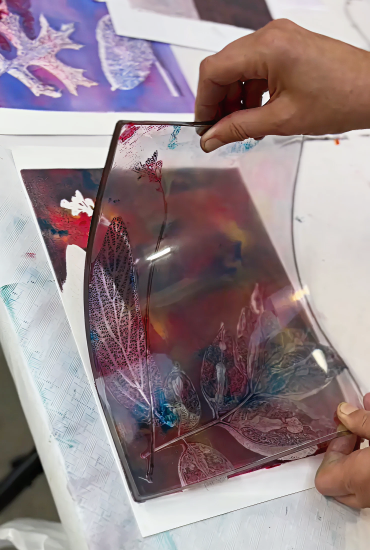
Speedball Gel Printing Plates were specially-formulated for use with printmaking inks, and are ideally-suited for use with Akua Intaglio and Akua Liquid Pigment Inks. Akua Intaglio Inks are also compatible with other brands of gel printing plates, but cannot be used with homemade gelatin plates as these plates will resist the ink due to the soy base. Akua Liquid Pigment Inks may be used both with competitive gel printing plates and homemade gelatin plates.
Oily blooms/halos are appearing on my paper after printing. What is causing this?
The interaction between ink and paper may be the cause of this issue and/or the ink application for the print is too heavy. Thin, Japanese-type papers may be particularly susceptible to this. Akua Liquid Pigment is recommended for use with these types of papers due to its binder type. Depending on the specific process utilized, Akua Liquid Pigment may be used directly from the bottle or mixed with wheat paste or methylcellulose (the amount of each depends on desired color, paper used and the environment’s humidity). Adding wheat paste or methylcellulose to Akua Liquid Pigment will make the ink dry more quickly. If a greater open time is needed, simply add Akua Retarder to the ink (Akua Retarder for use with Akua Liquid Pigment only).
The ink on my print is too light when it dries. How can I correct this?
The following may be related to this issue:
• The ink needs to be more thoroughly stirred in the jar before using.
• The paper/ink interaction is not ideal. Try another type of paper.
• The paper may be too wet (soak less, blot more).
• The plate may be over-wiped (try using an inky Akua Wiping Fabric).
The ink on my print is too dark when it dries. How can I correct this?
The following may be related to this issue:
• The color selected may be too intense by nature. Add Akua Transparent Base to the ink to reduce the color's intensity.
• The paper may be too wet (soak less, blot more).
• The ink/paper interaction may not be ideal. Try different papers.
How do I keep the ink from wiping out from incised lines?
This will often occur when the ink is too loose. Akua Mag Mix or Calcium Carbonate can be added to stiffen the ink.
There is too much plate tone on my print. How can I decrease it?
The following may be related to this issue:
• Print on dry paper.
• Wipe more thoroughly.
• Do a final wipe with clean Akua Wiping Fabric.
• Lightly coat wiping cloth with Magnesium Carbonate.
• Clean selected areas with cotton swabs.
My prints are drying blotchy. What can I do to keep this from happening?
The following may be related to this issue:
• Change blankets.
• Dampen the paper more evenly.
• Avoid touching the inked surface of the plate and transferring fingerprints.
The ink I just purchased is runnier/thicker than the Akua Intaglio inks that I’ve used in the past. Do I have a bad batch?
The viscosity of Akua Intaglio Inks vary naturally across colors and can be easily modified to the desired viscosity. To stiffen the ink, Akua Mag Mix or Magnesium Carbonate can be added. To loosen, Akua Blending Medium can be added to the ink.
When will the print be dry enough to frame under glass?
As long as the print is not touching the glass, the print can be framed under glass almost immediately. Unlike traditional oil-based inks, Akua Inks dry by absorption, not evaporation; therefore, they will not leave a “film” on the glass as they dry. If the glass will be touching the print, let the print dry for at least 24-48 hrs. It is recommended to lay a piece of Newsprint on top of your print as it dries (with something heavy on top of it, like a book, if possible) to help pull up any residual ink that was left sitting on the surface. Residual ink left on the surface will not dry, as it was unable to fully absorb into the paper. This happens when one applies too much ink.
Where can I find information regarding the specific pigments used in the individual colors?
Manufacturers are free to give their art supply colors whatever name they deem appropriate. Different manufacturers give different names to the same color, even if the same pigments are used. Therefore, names may vary from one brand to another. Akua tries to use the pigments technical name for Akua Inks. For instance, the names Hansa Yellow, Phthalo Blue and Quinacridone Red refer to the specific pigment used in that ink. Some pigments may have several technical names. In that case, we try to select the most popular name. Colors such as Olive Green, Turquoise Blue and Paynes Gray usually contain a mixture of several pigments. When trying to identify pigments used in ink or paint, research the color index name, not the name given by the manufacturer.
The Color Index is a list of identification numbers and names given to individual pigments used in all art materials. It is published by the Association of Textile Chemists and Colorists (USA).This information identifies the actual pigment used in a particular ink or paint. It also indicates whether it is made from a single pigment or a mixture of pigments. The color index names for all pigments used in Akua inks can be found on Akua ink containers and our User Guide.
Single Pigments or Pre-Mixed Blends - What's the difference? If a product is referred to as a single pigment, it means that it was made with the use of just one pigment. When mixing your own colors, a single-pigment color will mix truer and more predictably. For brightest, most intense results it is best to start by mixing with single pigments. When the manufacture premixes and packages two or more pigments for the users convenience it is referred to as a pre-mixed blend. If you mix your own ink, there is little advantage to purchasing pre-mixed inks.
All Akua Inks with the exception of four colors are made with single pigments. A single-pigment color will mix truer and more predictably than pre-mixed colors. For example, to create bright green it is advised that you start with a pure yellow and pure blue. A yellow ink that is pre-mixed with some red, combined with a blue ink that is pre-mixed with some purple will yield a brownish green. The unexpected hints of complementary colors in the pre-mixed inks will cause the resulting green to be muddy. If the printmaker knows beforehand whether their ink is a single pigment or a pre- mixed blend they will experience fewer surprises while creating desired colors. To avoid wasting ink and time check the color index names before purchasing and mixing.
Can I print on fabrics using Akua Inks?
Printing on fabric with Akua Inks can be done, but must be experimental as we do not have any formal testing for this specific process. Akua Inks do stain, although they do not contain dyes, so they cannot be treated as a dye. The inks will not be permanent on fabrics, and should not be used on projects that will be handled often or washed. Additionally, the inks cannot be heat set to make permanent.
Can I use a sealer after printing with Akua Inks?
If you are extremely concerned with rub-off and are comfortable with using spray fixative, a clear, acrylic spray gloss can be used with Akua Inks. To adequately “seal” your print, apply approximately three very thin coats of spray gloss. It is not recommended to use a matte or satin finish spray fixative, as it will alter the appearance of the inks’ color.
Can I use Akua Inks for letterpress?
Akua Intaglio Inks can be used for letterpress printing. Since letterpress typically requires a stiff ink (barely able to fall off of the ink knife), though, it is likely the Akua Intaglio will need to be stiffened. To do this, mix equal parts Akua Mag Mix with powdered Magnesium Carbonate. Next, add this mixture into the ink. Use small amounts of the mixture and continue to add until the desired thickness is achieved. Please note that ink containing Magnesium Carbonate will get thicker the longer it sits. Ink that has been mixed will Magnesium Carbonate will reach maximum thickness in 12 to 24 hours.